
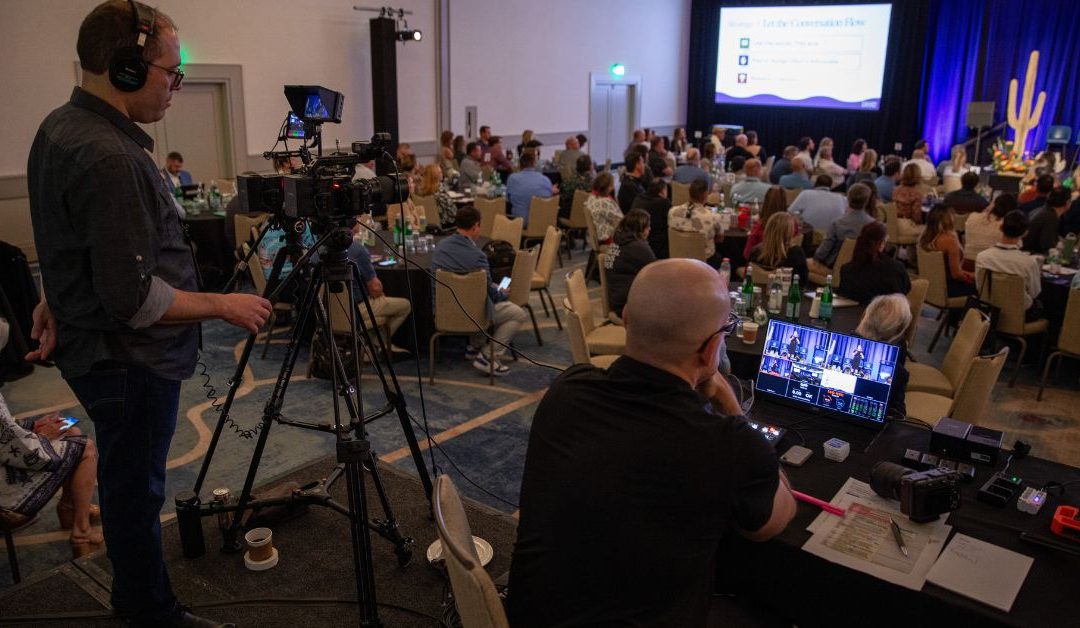
Corporate Event Production: What It Takes to Get It Right
Corporate events bring people together around a shared purpose. They recognize achievements, communicate company priorities, build relationships, educate audiences, and create opportunities for businesses and organizations to connect.
But producing a successful event involves more than booking a venue, arranging a schedule, and making sure everything runs on time.
There’s also the production behind the experience: photography, video, livestreaming, speaker recording, interviews, attendee activations, and the coordination required to make all those pieces work together.
For organizations planning conferences, corporate meetings, awards programs, association events, or brand activations, getting the production right can make a meaningful difference in both the event experience and the value it delivers afterward.
At Lumedia Creative, we bring event photography, video production, livestreaming, and branded activations together under one coordinated production plan.
Here’s what to consider when planning production for your next event.
What Is Corporate Event Production?
Corporate event production is the planning, coordination, and execution of the technical and creative elements that support an event.
Depending on the event, that may include photography and video coverage, multi-camera recording, livestreaming, audio and video switching, speaker interviews, attendee portraits, testimonial stations, and branded photo activations.
The scope varies considerably.
A small corporate meeting may need a photographer and a few interviews. A multi-day conference may require several camera operators, dedicated recording for each session, a livestream, a headshot booth, and a team producing content for use across multiple marketing channels.
The important distinction is that production should be designed around the event’s objectives, audience, schedule, and content requirements.
Rather than treating each service as an unrelated addition, an integrated production approach considers how the pieces work together from the beginning.
The Core Components of Event Production
Not every event requires every service. Understanding the available options helps you determine what your event actually needs.
1. Event Photography
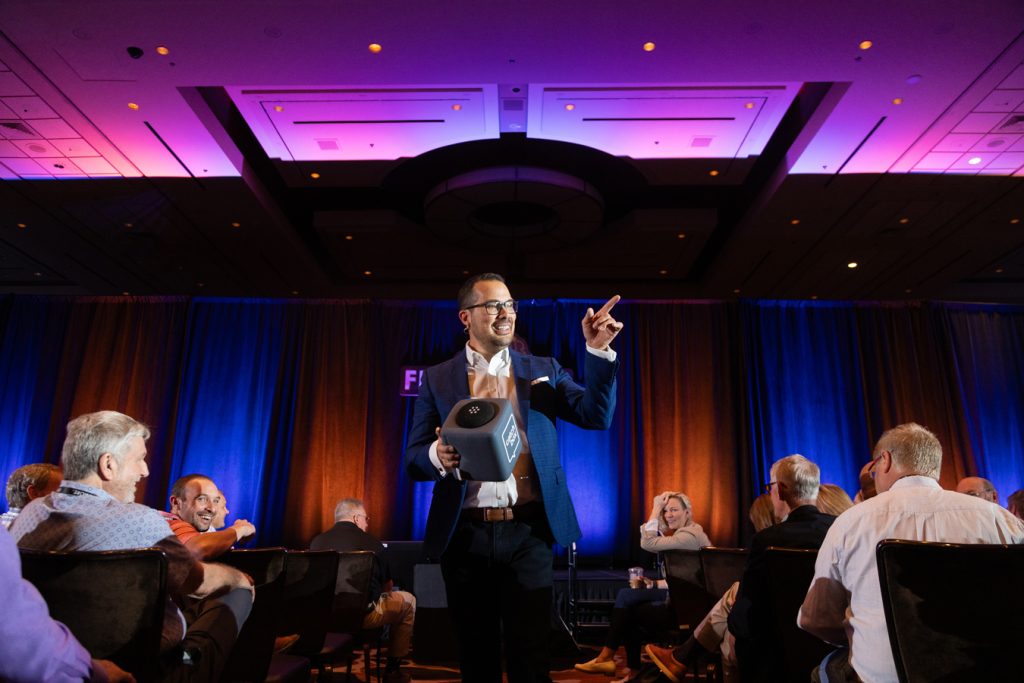
Professional event photography documents the people, interactions, presentations, and details that define the experience.
Typical coverage includes:
- Keynotes, panels, and presentations
- Attendee interactions and networking
- Executive, VIP, and sponsor coverage
- Branded environments and event details
- Awards, recognition, and milestone moments
These photographs can be used in post-event recaps, company communications, social media, marketing campaigns, sponsor reports, and promotion for future events.
A strong photography plan accounts for the event schedule, priority people, important moments, and any specific images the marketing team needs.
2. Event Videography and Highlight Films
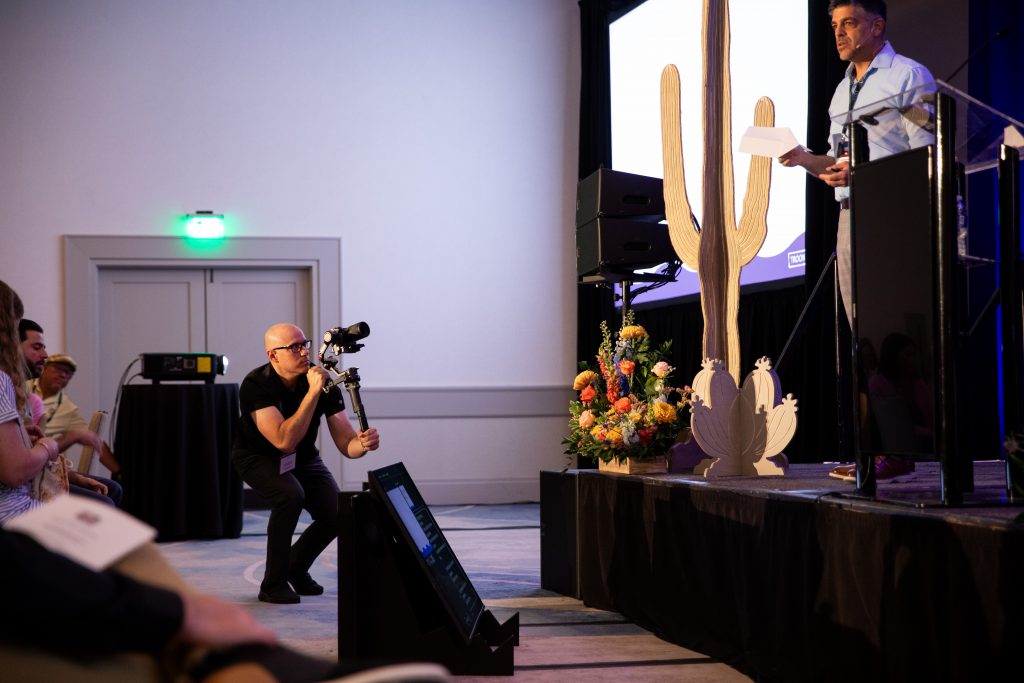
Video brings movement, sound, energy, and context to an event recap.
Depending on the objectives, coverage might include a highlight film, a fast-paced sizzle reel, interviews, speaker footage, or short-form social media videos.
A highlight film can communicate the atmosphere and scale of an event to people who weren’t there. A sizzle reel can help build interest in next year’s conference. Interviews can provide testimonials, thought leadership, and brand storytelling.
These deliverables serve different purposes, so it’s worth determining which ones matter most before production begins.
3. Multi-Camera Production and Conference Recording
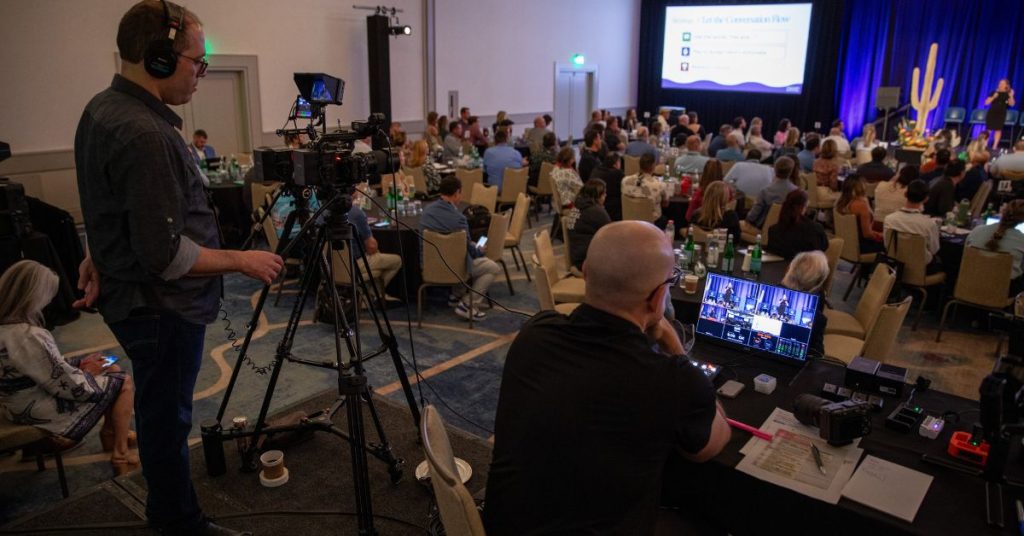
When an event includes keynotes, panels, workshops, or presentations, recording those sessions can extend their value beyond the live audience.
Multi-camera production allows the final recording to move between speakers, wide shots, presentation visuals, and other relevant details. Proper audio capture is equally important: even an excellent-looking recording becomes difficult to use if the speaker cannot be heard clearly.
Recorded sessions can support internal training, on-demand access, continuing education, member resources, and future communications.
The recording plan should account for the number of stages or rooms, session schedules, presentation feeds, audio requirements, and delivery format.
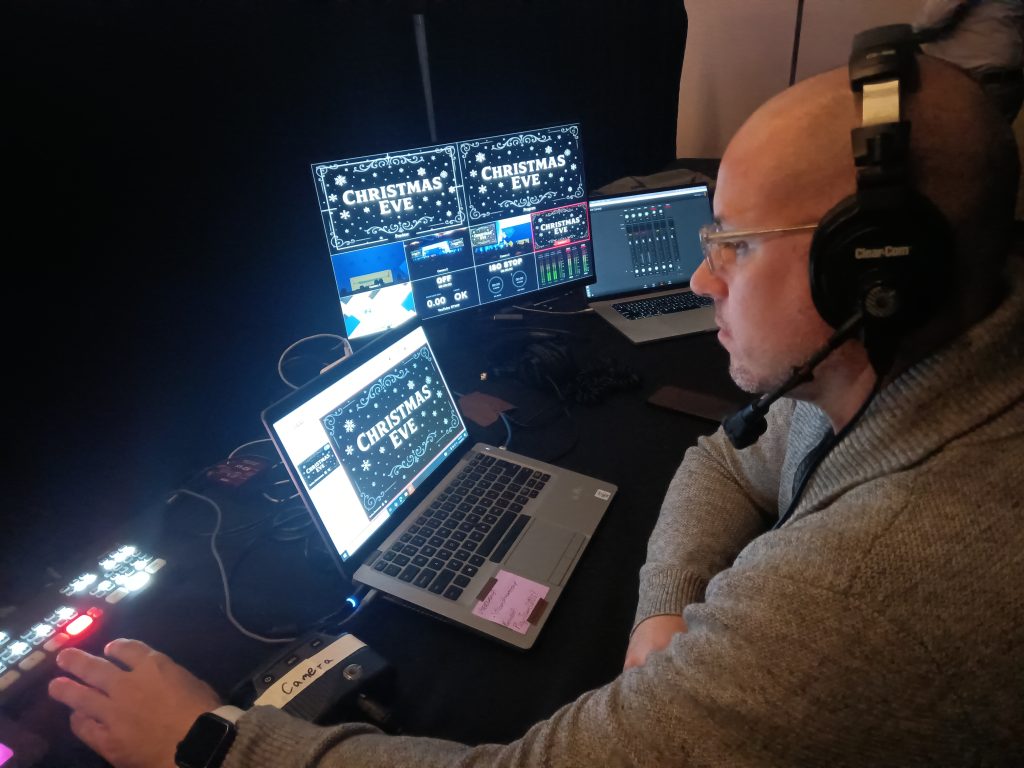
4. Livestreaming
Livestreaming allows people to participate in an event without being physically present.
It’s particularly useful for organizations with geographically distributed teams, remote members, external stakeholders, or audiences that cannot travel to the venue.
A professional livestream involves more than pointing a camera at a stage. Camera placement, audio, switching, internet connectivity, presentation feeds, monitoring, and contingency planning all contribute to a reliable broadcast.
The production requirements depend on whether you’re streaming a single presentation, a panel discussion, or a multi-session conference.
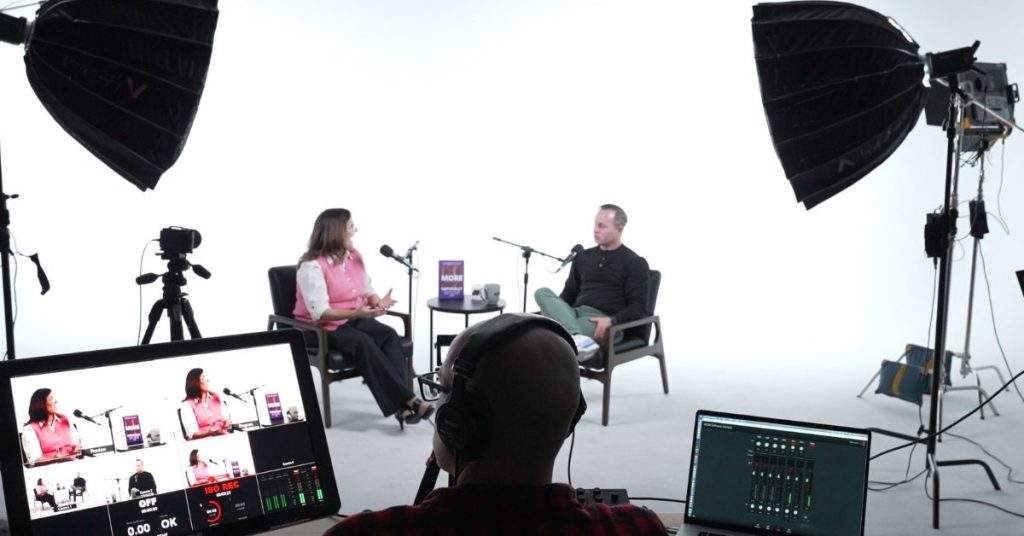
5. Interviews and Testimonial Content
Events bring together people who may be difficult to gather in one place at another time.
That makes them valuable opportunities to capture interviews with executives, speakers, attendees, members, customers, and sponsors.
A dedicated interview setup can create a consistent environment for capturing polished statements without competing with the noise and activity of the event floor.
These recordings can become short social videos, customer testimonials, executive communications, recruitment content, or thought leadership.
The best results come from identifying interview subjects, preparing questions, and scheduling time before the event gets underway.
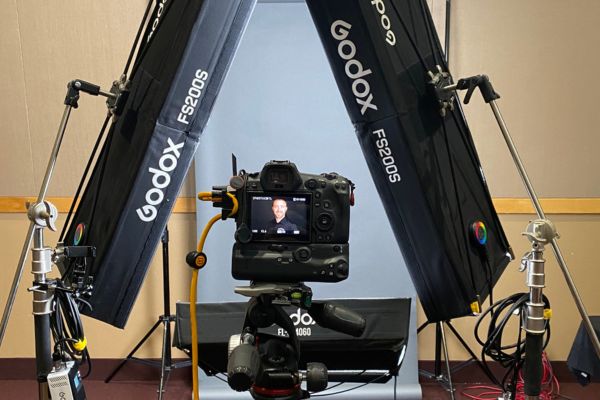
6. Headshot Booths and Branded Activations
Some event production services provide value to attendees while creating useful content for the host organization.
A headshot booth offers attendees professional portraits. A step-and-repeat setup creates branded portraits of speakers, executives, sponsors, and guests. A testimonial booth provides a dedicated space for collecting attendee feedback or customer stories.
These activations need to be planned around traffic flow, lighting, available space, branding, staffing, and the attendee experience.
When thoughtfully integrated, they become more than an extra feature. They give people a reason to participate while supporting the organization’s broader objectives.
How to Plan Event Production Before the Event
The most important production decisions happen before the cameras turn on.
Starting with a clear plan helps prevent missed moments, conflicting schedules, unnecessary equipment, and gaps in the final deliverables.
Define the objective
Begin by identifying what the organization needs the event to accomplish.
Are you documenting a conference, communicating a company announcement, attracting future attendees, delivering content to remote audiences, supporting sponsors, or building a library of marketing assets?
An event can have several objectives, but identifying the priorities helps determine where production resources should go.
Build a deliverables list
Be specific about what needs to be delivered.
Instead of requesting video coverage in general, determine whether you need a highlight film, individual session recordings, executive interviews, short-form social clips, or a combination of formats.
For photography, identify key speakers, VIPs, sponsors, important interactions, and any required branding or environmental images.
The deliverables list should reflect how the organization intends to use the material, not simply how much coverage can be captured.
Coordinate the schedule and locations
Production teams need to know when important moments happen, where they take place, and how much time is available to capture them.
Share the event schedule, speaker information, VIP requirements, stage layouts, venue restrictions, and interview windows as early as possible.
For larger events, consider overlapping sessions, simultaneous activities, room transitions, and the time needed to move equipment between locations.
Plan the technical requirements
Each production component introduces different requirements.
Livestreaming may require a dedicated internet connection and backup plan. Conference recording may require access to presentation feeds and the venue’s audio system. Interview stations need suitable lighting, sound control, and space.
These details should be addressed with the venue and relevant vendors before event day.
Establish a delivery and distribution plan
Determine who will receive the content, what formats are needed, and when the assets should be delivered.
If the marketing team needs selected photographs quickly, that should be discussed in advance. If videos will be published across multiple platforms, identify the intended formats and any editing requirements.
A defined delivery plan makes it easier to move from production to actual use.
Why One Coordinated Production Team Can Help
An event may require several different services, but that doesn’t mean every service needs to come from a separate vendor.
Coordinating a photographer, videographer, livestream provider, interview crew, and headshot activation independently can create additional contracts, schedules, communications, and handoffs.
When those services are planned together, the production team can coordinate coverage, share the schedule, anticipate equipment needs, and align the work with the event’s overall objectives.
This doesn’t mean every event needs a large production crew. A focused photography assignment may be exactly right for a small meeting. A major conference may require multiple cameras, dedicated operators, livestreaming, and several simultaneous activations.
The objective is to scale the production to the requirements of the event while maintaining a clear plan and point of contact.
Lumedia Creative provides event production for corporate events, conferences, associations, awards programs, and brand activations, with services ranging from focused photo and video coverage to coordinated multi-camera production and attendee activations.
What Happens After the Event Matters
The work doesn’t have to end when the venue closes.
A conference can generate a highlight film, speaker clips, attendee testimonials, social media content, executive communications, and photographs for future campaigns. An awards program can produce promotional assets, interviews, and content that helps build interest in the next event.
The key is to plan for those uses before production begins.
When the intended deliverables are clear, the team can capture the right moments, organize the material, and create assets that serve different purposes over time.
For a deeper look at how organizations can extend the value of event content, read our companion article, [The Event Ends. The Content Doesn’t.] [Add the published blog URL here.]
Choosing the Right Event Production Partner
Before hiring an event production company, consider a few practical questions.
Can they handle the services your event requires? Ask about their experience with the specific combination of photography, video, livestreaming, recording, or activations you need.
Do they understand the event’s objectives? A capable production partner should ask what you’re trying to accomplish, who the audience is, and how the content will be used.
Can they plan around the realities of the venue and schedule? Production requires coordination with event organizers, venues, speakers, and other vendors.
Can they explain what you’ll receive? Confirm deliverables, turnaround expectations, formats, and how the content will be delivered.
Will you have a clear point of contact? Clear communication and ownership make complex production arrangements easier to manage.
The right partner isn’t necessarily the one offering the longest list of services. It’s the one that understands your requirements and can build a production plan around them.
Plan Your Next Event With Lumedia Creative
A successful event deserves production that supports the experience, captures the important moments, and creates content your organization can continue using.
Whether you’re organizing a corporate meeting, a multi-day conference, an awards program, or a large-scale brand activation, Lumedia Creative can help coordinate the photography, video, livestreaming, and attendee experiences your event requires.
We work with organizations to understand their goals, plan the production requirements, and determine what needs to be captured and delivered.
Planning an upcoming event?